
For years, corporate travel programmes have been measured by three things: savings, service and traveller satisfaction.
Those measures still matter.
But today, organisations are asking a bigger question.
Do we have complete visibility of our travel programme?
According to the latest Global Business Travel Association (GBTA) Outlook Poll, business travel continues to grow in 2026 despite rising costs, geopolitical uncertainty and increasing operational complexity. At the same time, 50% of travel buyers plan to increase investment in traveller safety and risk management, while 49% plan to increase investment in technology and digitalisation.
The message is clear. Organisations aren’t travelling less. They’re demanding greater visibility, stronger governance and better decision making.
As travel programmes become more complex, governance has become just as important as cost.
Because you can’t govern what you can’t see.

“For more than 30 years, we’ve believed trust is earned through transparency. Clients shouldn’t have to wonder how decisions are made, where their travel spend is going, or whether recommendations are truly in their best interests.
Good governance isn’t an added extra. It should be the foundation of every travel programme.”
Lisa Story
Founder & Managing Director, Orbit World Travel
Good governance isn’t about receiving another report at the end of the month.
It’s about having the right information to make confident decisions while your travel programme is operating.
That means having visibility across:
When organisations have that level of visibility, they reduce risk, improve decision making and strengthen accountability across the business.
The best travel programmes are built on alignment.
When the interests of the organisation, its travellers and its travel management company are aligned, decisions become simpler, more transparent and easier to defend.
That means making recommendations because they’re right for the client, not because they’re commercially convenient.
A trusted travel management partner should be willing to:
Organisations should expect a partner that helps improve their travel programme, not simply manage bookings.
A report delivered after the fact doesn’t improve governance.
True visibility means understanding what’s happening while decisions are being made, whether that’s identifying unused airline ticket credits, monitoring policy compliance, locating travellers during disruption or measuring carbon emissions.
The goal isn’t more reports.
It’s better decisions.
Technology has transformed corporate travel, but technology alone doesn’t create trust.
It should make travel programmes easier to understand, not more difficult to scrutinise.
Organisations should expect access to:
Technology shouldn’t replace accountability.
It should strengthen it.

“The most successful travel programmes aren’t measured by bookings alone. They’re measured by the visibility they provide, the decisions they enable and the confidence they give organisations in managing risk, spend, compliance and traveller wellbeing.”
Julius Ungar
Head of Business Solutions, Orbit World Travel
At Orbit World Travel, governance isn’t a philosophy. It’s built into the way we manage client travel programmes every day.
One of the simplest examples is airline ticket credits.
Without complete visibility, unused credits can easily expire, resulting in unnecessary travel spend. Through Orbit Credits, we’ve helped clients recover more than $1.2 million in unused airline ticket credits by making those credits visible and easy to manage.
Visibility doesn’t stop there.
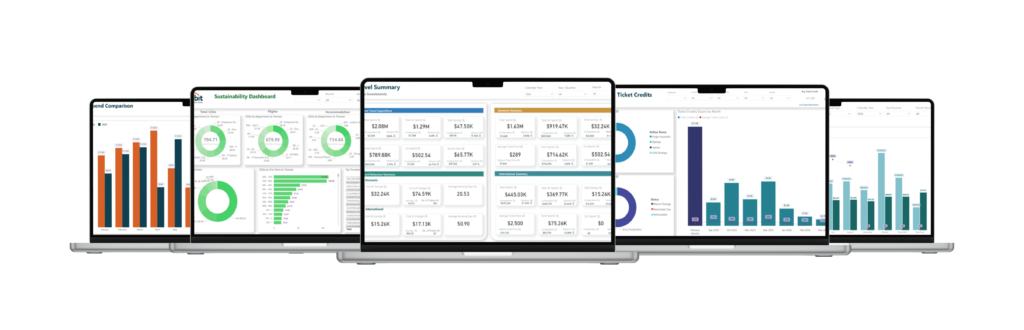
Through Orbit Intelligence and Intelligence Plus, clients have access to live reporting across travel spend, policy compliance, traveller behaviour, supplier performance and carbon emissions, giving decision makers a clearer picture of programme performance.
Governance also extends beyond financial oversight.
Organisations have a responsibility to know where their people are travelling and support them when plans change. Orbit Care provides real-time traveller tracking, travel alerts and two-way communication during disruptions, helping organisations fulfil their duty of care obligations wherever employees are travelling.
Sustainability has also become an important governance measure.
Powered by Thrust Carbon, Orbit provides emissions reporting at trip, traveller and programme level, supporting Scope 3 reporting and helping organisations make more informed travel decisions.
Orbit is also certified under Toitū Carbon Reduce, reinforcing our commitment to reducing operational emissions while helping clients better understand theirs.
Clients already have access to live reporting and programme data through Orbit’s technology.
The role of our Client Partnership Managers isn’t to present information clients can already see.
It’s to interpret that information, identify trends, challenge assumptions and recommend practical improvements that strengthen programme performance over time.
By combining live programme insights with strategic advice, they help organisations strengthen governance, improve traveller experience, optimise spend and continuously enhance programme performance.

“The data is already there. Our role isn’t to read reports back to clients, it’s to help them understand what the data is telling them. We look for trends, challenge assumptions and identify opportunities that improve programme performance over time.”
Matt Burris
Head of Account Management, Orbit World Travel
Every client is supported by a dedicated Client Partnership Manager, working alongside their business to turn insight into action.
Whether you’re reviewing your travel programme or simply looking to strengthen governance, ask yourself:
If any of those questions are difficult to answer, there may be opportunities to strengthen the governance of your travel programme.
A travel management company should do far more than arrange flights and hotels.
It should help organisations manage risk, strengthen governance, support travellers and provide confidence that every recommendation is made in the client’s best interests.
The organisations with the strongest travel programmes won’t necessarily be those spending the least.
They’ll be the ones that can see the most.
If you’re reviewing your current travel management arrangements, or simply want greater visibility into how your programme is performing, we’d welcome the opportunity to start a conversation.
We’ll help you assess your current programme, identify opportunities to strengthen governance and demonstrate what greater visibility looks like in practice.
Because good governance starts with visibility.
And you can’t govern what you can’t see.